
Overview
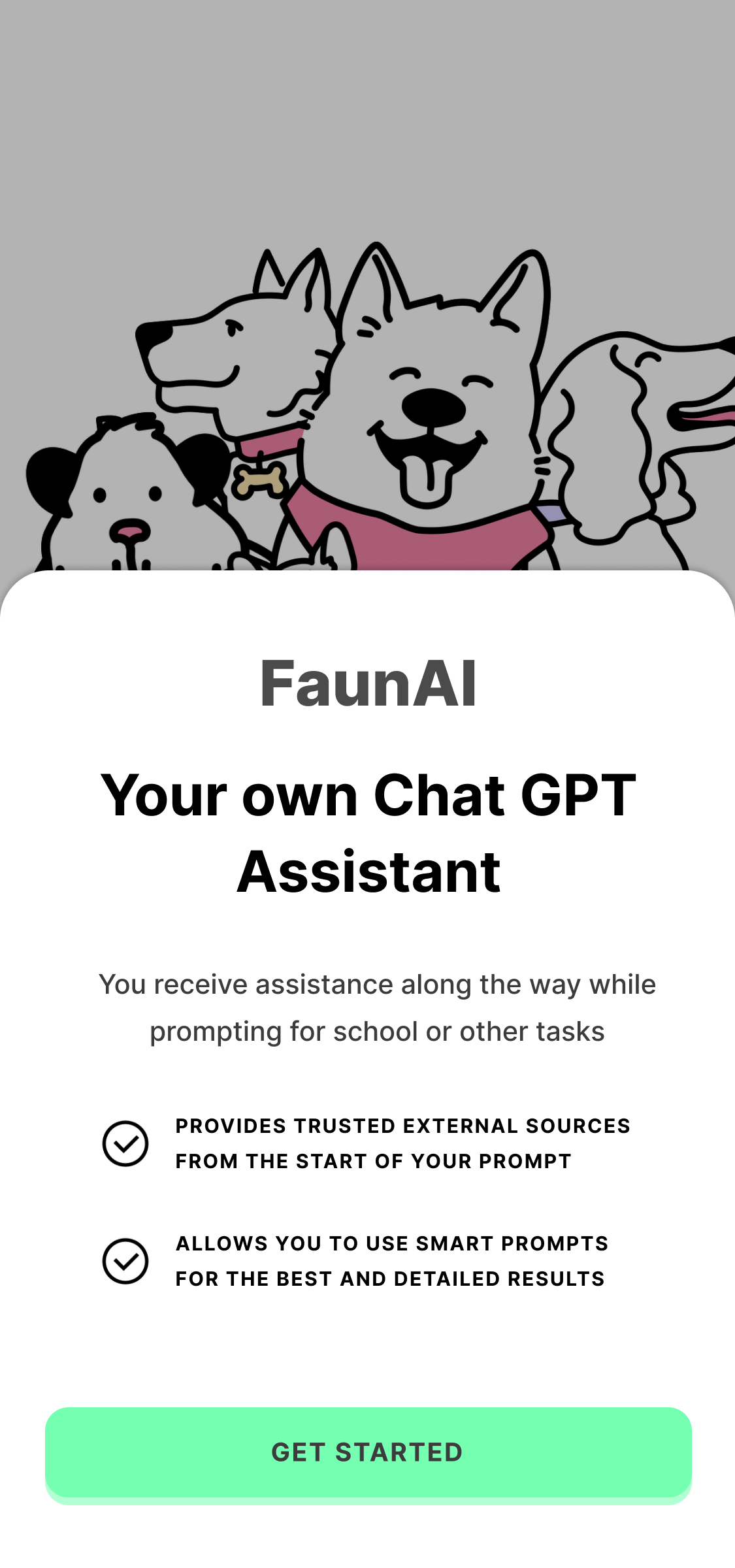
FaunAI is a ChatGPT assistant tool designed to make students (18–25) more aware of their AI usage and its ecological impact. The goal wasn't to block AI... it was to build a smart layer on top of it that encourages independent thinking without getting in the way.
The design challenge: create meaningful behaviour change without being preachy, while keeping the experience genuinely easy to use.
My role
Solo graduation project, the full process from research to final prototype. Commissioned by the HvA lectorate Creative Media for Social Change.
- Conducted desk research, user interviews, expert interviews, and card sorting sessions
- Defined the concept and design challenge based on research insights
- Designed and iterated multiple prototypes in Figma, from lo-fi to interactive
- Tested with users and stakeholders, adjusting each round based on feedback
- Validated the final concept against a full Programme of Requirements (PvE)
Process
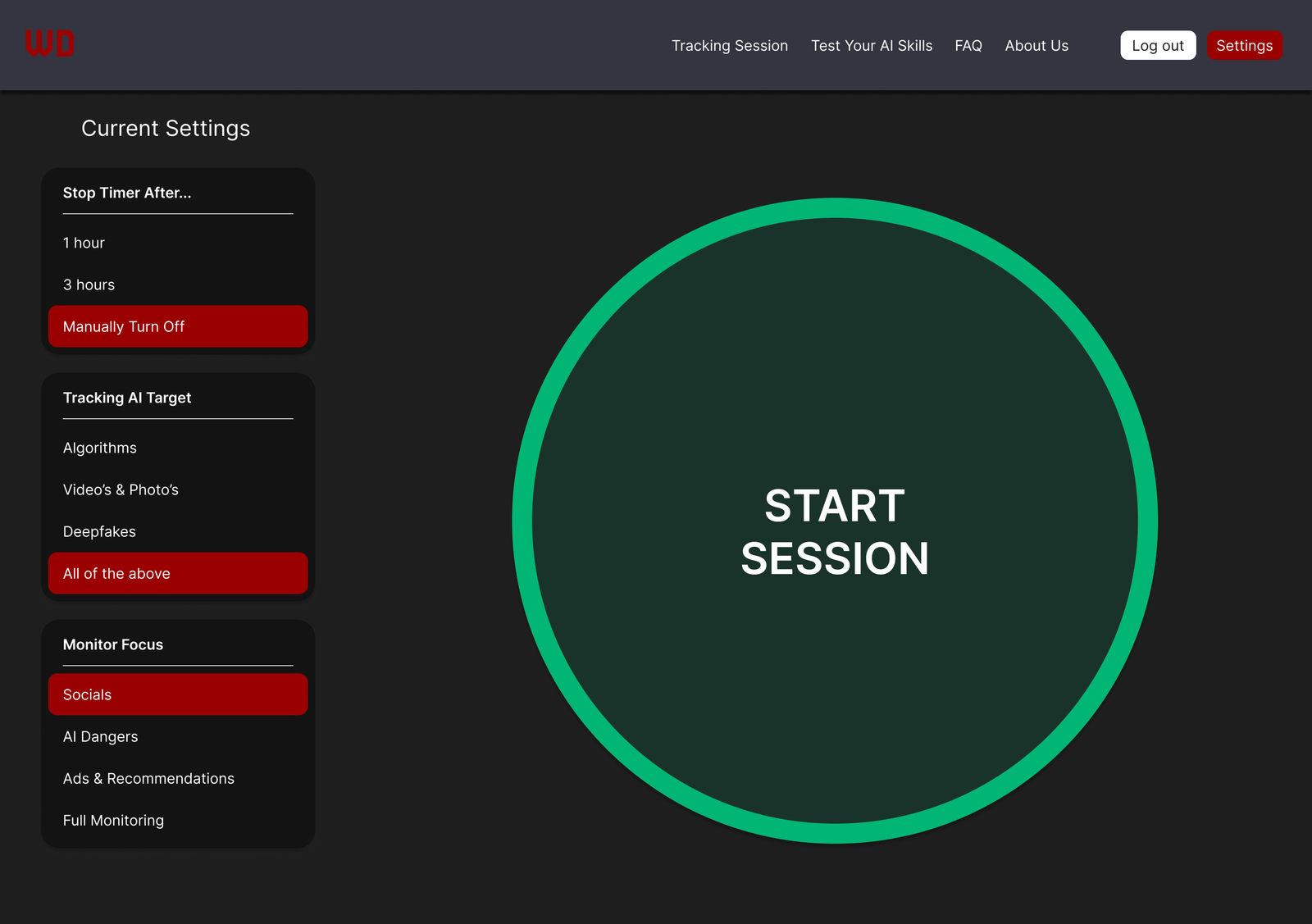
I started broad, wanting to visualize AI's hidden influence across social media and browsing. That turned out too wide. Interviews quickly revealed that every respondent was using ChatGPT daily, but almost none thought about its environmental footprint. That became the focus.
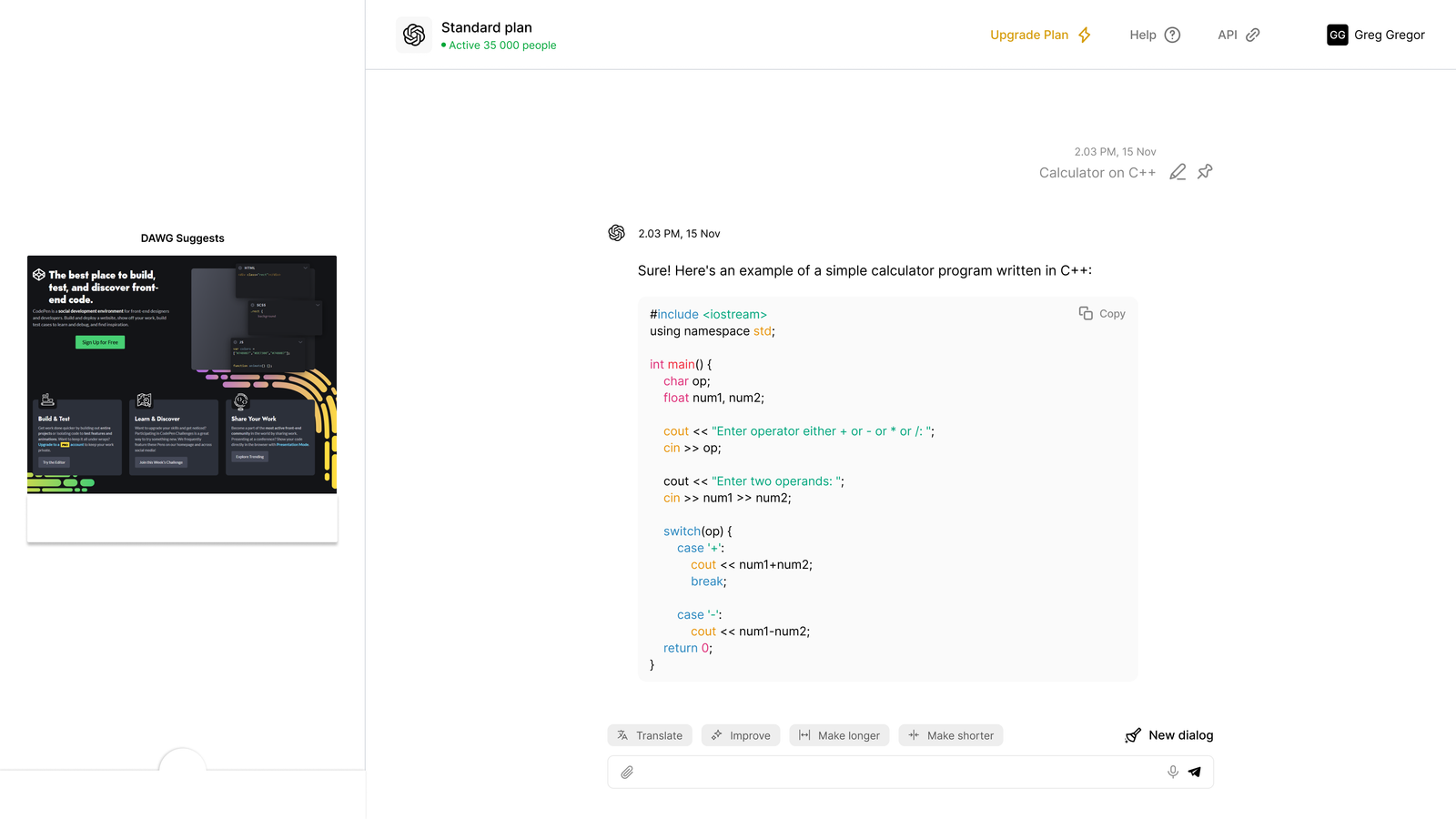
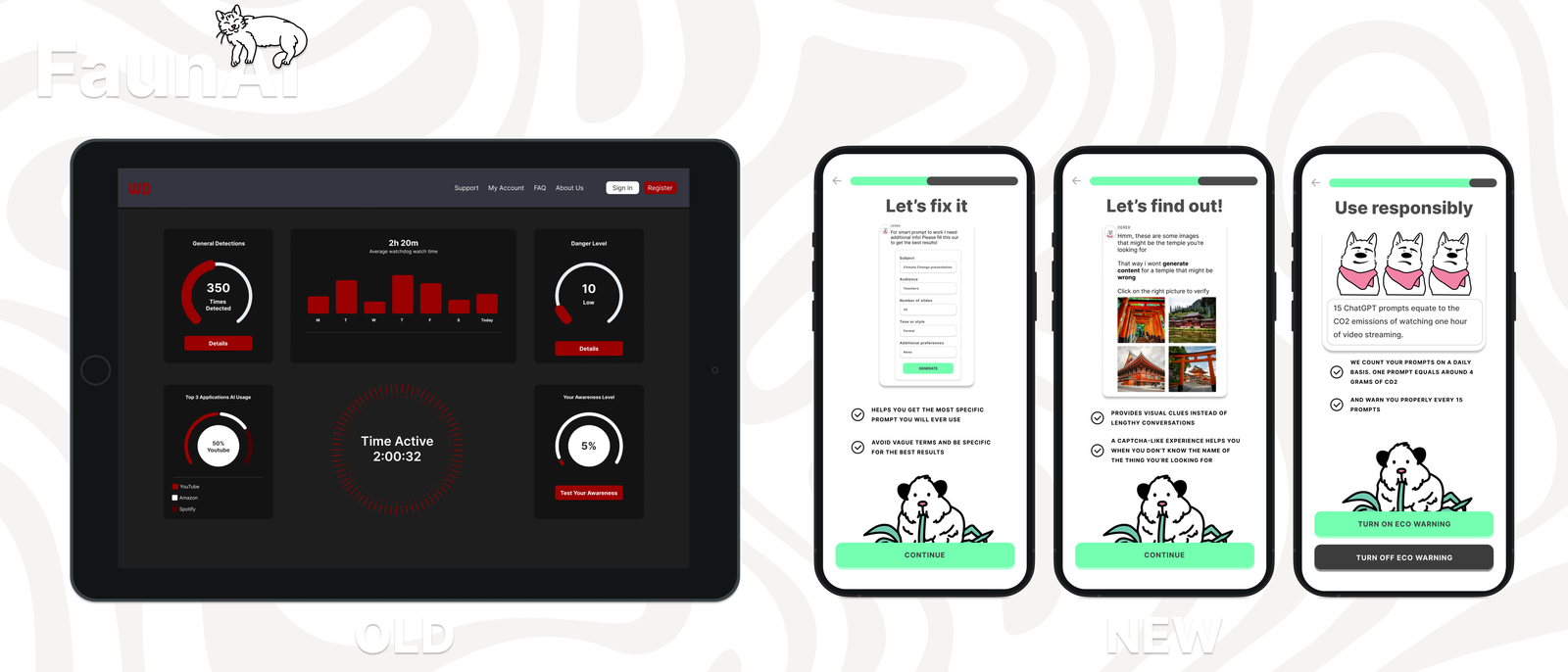
From there I ran co-creation sessions, A/B tests, and multiple prototype rounds. A key pivot: the first concept was too rigid. I shifted toward a flexible system where users could personalize the assistant to their own style and needs.
Each iteration was tested with students and stakeholders, constantly checking whether the nudges felt natural or just added friction.
Result
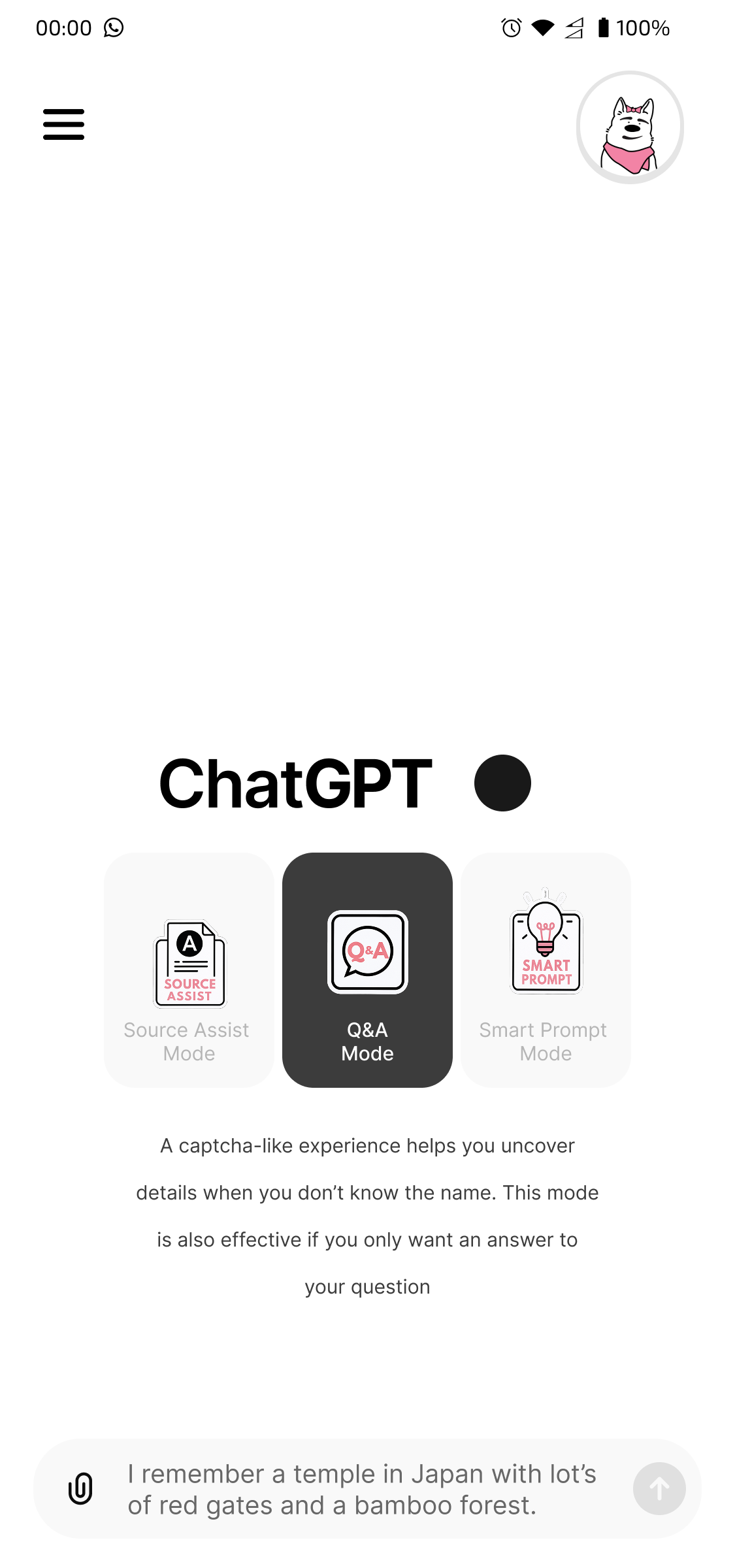
A validated concept for a ChatGPT assistant layer that helps students prompt smarter, use AI less blindly, and understand its ecological impact through features like smart prompt templates, visual eco-feedback, avatar personalization, and a badge reward system.
Validation confirmed all requirements were met. What's still missing is the real-world test: does it hold up outside prototypes? That's the logical next step.